
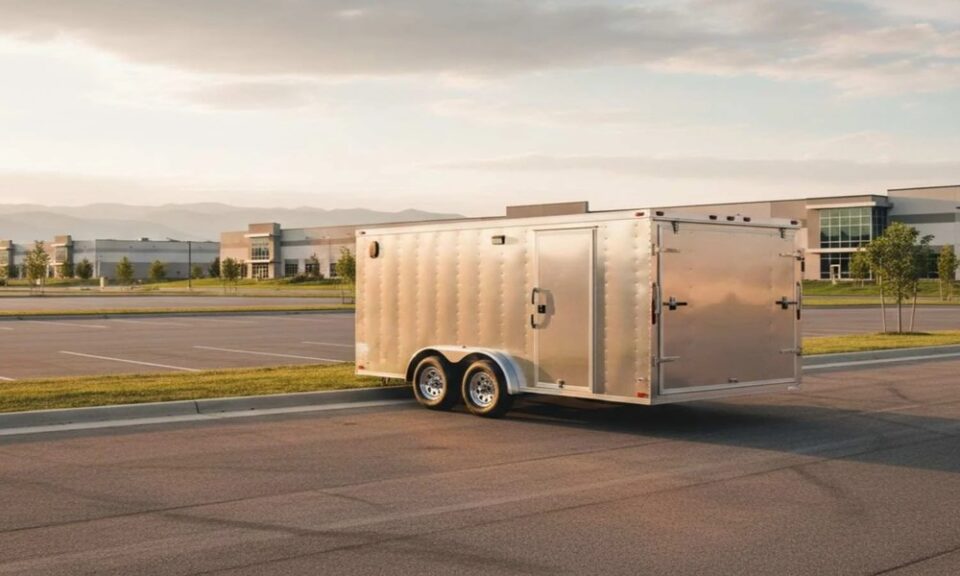
Utah is one of the hardest climates in the country on a trailer and whatever’s riding on it. A single week in spring can bring 70-degree sun, afternoon hail, a dust storm rolling off the west desert, and an overnight freeze. Summer adds UV exposure strong enough to chalk paint and crack rubber. Winter brings road salt and magnesium chloride brine that eats steel from the inside out. The question of enclosed versus open isn’t really about trailers. It’s about what you’re willing to replace in five years.
The team at Workhorse Trailers gets this question constantly from customers across Northern Utah, and the right answer shifts depending on what you’re hauling, how often, and where it lives between trips. Here’s the honest breakdown.
What Open Utility Trailers Actually Handle Well
Open utility trailers are the default for good reason. They’re cheaper, lighter, easier to load from any angle, and they fit in standard garages and driveways without a fight. For a homeowner hauling gravel, green waste, a lawn tractor, or the occasional dirt bike, an open trailer is almost always the right call.
Weather exposure is a real factor, but it’s not a deal-breaker for cargo that’s already built to live outside. A side-by-side, an ATV, a pallet of pavers, or a load of mulch doesn’t care about a rain shower. Where open trailers start losing is with anything that rusts, fades, absorbs water, or attracts attention in a parking lot.
A few realities about open trailers in Utah conditions:
- Road brine sticks to the underside and wheel wells. Without rinsing, frame rust can start within the first winter.
- UV exposure fades painted steel and cracks tire sidewalls faster than most owners expect. A trailer parked outside year-round in Cache Valley or St. George typically needs new tires every 4-5 years even with minimal miles.
- Dust from I-80 and the western desert works into hub bearings if the seals aren’t maintained.
Open trailers aren’t fragile. They just need more maintenance to last, and that maintenance is the tradeoff for the lower price.
Where Enclosed Cargo Trailers Earn Their Price
An enclosed cargo trailer costs roughly double what a comparably sized open trailer costs. That gap narrows fast once you factor in what you’re protecting.
Classic cars are the obvious example. A 1970 Chevelle getting hauled from Ogden to a show in Moab on an open trailer picks up rock chips, bug splatter, and UV damage on a single trip. An enclosed trailer eliminates all of it. The same logic applies to show motorcycles, restored tractors, and any vehicle where the paint matters more than the mechanicals.
Tools are the other big category. Contractors storing saws, compressors, and power tools in an open trailer are essentially advertising them. Enclosed trailers lock, and the difference in overnight security at a jobsite in Provo or Salt Lake is enormous. Insurance rates reflect this. Many contractor policies charge noticeably less for tools stored in a locked enclosed trailer versus an open setup with tarps.
Other cargo that benefits from an enclosed build:
- Dirt bikes and ATVs with aftermarket plastics and graphics that fade in sun
- Landscape equipment with electronics or hydraulics that don’t mix with snow
- Furniture, appliances, and anything moisture-sensitive
- Race cars, project vehicles, and anything being stored seasonally
Enclosed trailers also double as secure storage at home. A 7×16 enclosed trailer parked in a side yard effectively becomes a locked shed that happens to move.
The Weather Factors Most Buyers Underestimate
Utah’s climate punishes trailers in specific ways that don’t show up in a spec sheet.
Magnesium chloride is the big one. UDOT uses it heavily on I-15, I-80, and mountain passes during winter. It’s effective at melting snow, and it’s also highly corrosive. Open trailer frames, leaf springs, and wiring harnesses exposed to brine need regular rinsing through the winter months. The Utah Department of Transportation publishes road treatment information that’s worth reviewing if you haul during winter.
UV exposure in Utah is stronger than most states because of the elevation. Salt Lake sits at 4,200 feet. Park City is above 7,000. UV intensity at those elevations accelerates tire degradation, fades paint, and breaks down rubber seals. Enclosed trailers protect cargo from this directly. Open trailers can be covered, but tarps flap, tear, and eventually stop being used.
Wind is the other overlooked factor. Gusts off the Wasatch Front and through Spanish Fork Canyon regularly hit 50 mph or more. Open trailers have no issue with wind, but enclosed trailers have a large sail area. If you’re towing an enclosed trailer across I-80 in a crosswind, tongue weight and load distribution matter more than they would in calm conditions. This is something the National Weather Service Salt Lake City office tracks closely during storm events.
Resale Value and Long-Term Ownership
Enclosed trailers hold value better than open utility trailers, and the gap widens with age. A well-maintained 10-year-old enclosed cargo trailer often sells for 60-70% of its original price. A comparable open utility trailer of the same age typically sells for 40-50% of original, and that’s assuming the frame hasn’t rusted.
Part of this is the protected environment inside an enclosed trailer. The interior walls, floor, and wiring stay out of the weather. Part of it is demand. The used market for enclosed trailers in Utah is consistently strong because of the mix of contractors, hobbyists, and outdoor recreation users who need them.
Open trailers age faster visually, and buyers can see every rust spot, faded sticker, and cracked deck board at a glance. That transparency drives prices down even when the trailer is mechanically sound.
Matching Trailer to Real-World Use
A practical shortcut for Utah buyers:
- Hauling yard debris, gravel, or equipment rated for outdoor use: open utility trailer, with a plan for winter rinsing
- Transporting ATVs, dirt bikes, or side-by-sides regularly: open trailer if they stay outdoors anyway, enclosed if they’re garaged and valuable
- Classic cars, show vehicles, or restoration projects: enclosed, every time
- Contractor tools and jobsite equipment: enclosed, for security alone
- Mixed use where you need both hauling capacity and lockable storage: consider a hybrid or larger enclosed with interior racks
Budget matters, but the wrong trailer for your use case costs more over five years than the upgrade to the right one.
Getting Long-Term Value from a Utah Trailer
The climate here rewards buyers who plan ahead. Enclosed trailers cost more upfront and pay back in protection, security, and resale. Open trailers cost less and work fine for cargo that doesn’t mind the weather, as long as maintenance stays on schedule. Workhorse Trailers builds and stocks both across a range of sizes, and the conversation on the lot usually comes down to honest answers about what you haul and where it lives between jobs.
If you’re on the fence, bring your use case to the Workhorse Trailers team and walk through the options in person. A trailer that matches your actual work in Utah’s climate will outlast one bought on price alone by years.
