
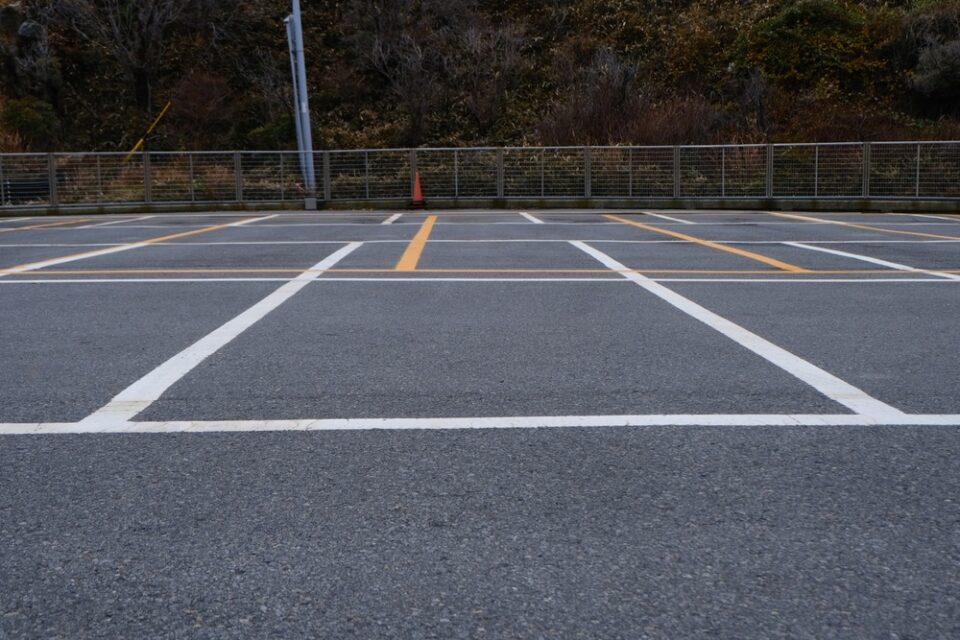
A parking lot with crooked lines looks careless. Drivers become confused and space is wasted. Clear straight lines improve traffic flow and safety. Business owners also build trust with customers through neat spaces. Parking stalls that are straight make every lot look professional. Sometimes one accurate line changes the impression of the whole property. Therefore the process of creating these lines must be exact. Tools and techniques play a central role in this precision.
The Role of Plumb Bobs
Plumb bobs are ancient tools with modern value. They ensure vertical accuracy in every marking task. A plumb bob drops a steady weight on a string. This guides workers in finding exact points on pavement. Straight lines then align perfectly with reference marks. This simple tool prevents angles that shift stalls out of square. Sometimes one precise drop defines the foundation for a whole layout. So this tool gives stability during the early layout stage. Consistency begins with a reliable point of reference.
Framing Squares for Right Angles
A framing square helps workers mark sharp corners. This tool ensures parking stalls meet at proper right angles. Straight edges connect smoothly when guided by a framing square. Lines stay true without drifting into awkward patterns. Businesses avoid wasted space through exact corner placement. Pedestrians and drivers also gain comfort in orderly designs. Sometimes one corner set right controls the balance of the whole lot. So framing squares create accuracy that remains after paint dries. This simple tool ensures perfect connections between all stall lines. The parking lot striping layout tools are important here.
Checking with Diagonal Measurements
Diagonal measurements confirm if stalls are square. Workers measure across opposite corners carefully. Equal diagonals mean lines are true and balanced. Unequal lengths show errors that need adjustment quickly. This step is critical before paint is applied. Precision saves time and avoids later costly corrections. Sometimes one small diagonal check prevents a full redesign of the lot. So diagonal measurement is a safeguard for accuracy. Every stall depends on this hidden but important double check.
Chalk Lines for Clear Visibility
Chalk lines mark paths before permanent paint. Workers snap lines that stay visible during layout. These temporary marks show exactly where paint will go. Adjustments are easy when chalk outlines guide the design. Mistakes are corrected before paint is applied. This ensures the final look is accurate and clean. Sometimes one bold chalk snap prevents misaligned rows from reaching final paint. So chalk lines prepare the surface for precise and lasting results. Preparation is as important as final painting in striping.
Conclusion
Precision in parking stall striping requires more than paint. Tools like plumb bobs framing squares and string lines provide guidance. Diagonal checks and chalk lines confirm accuracy and balance. Professional planning then ties all methods into one smooth process. Straight lines save space and improve safety for drivers and pedestrians. Businesses also present a clean and professional image through accurate stalls. Sometimes one perfectly straight stall line defines the success of the entire lot. Therefore accuracy in layout becomes a real investment in order.
